Why the best events and experiences don't stay in one place
Tsveta van Son
September 16, 2026
Read time:
min
Every event brief comes with a date and a venue. For most agencies, that's where the spatial thinking stops — find the right room, fill it well, and call it done. The most recognized work of 2026, however, started from a different question entirely: how far can this idea travel?
Among Platinum-winning events in the latest edition of Eventex Awards, multi-location or extended-calendar approaches appeared more than five times as often as among non-winning entries — 41.2% versus 8%. Here's what that means in practice, and how to build it into your next brief.
What a multi-location event platform looks like
Three of this year's most decorated campaigns show what it means to build an event idea that travels — and what holds each one together.
ARMONIA — Milano Cortina 2026 Winter Games Opening Ceremony
2.5 billion
viewers worldwide
Four
simultaneous locations, one live story
Two Olympic cauldrons lit at the same time — one urban, one alpine — gave every audience, wherever they watched, the same symbol
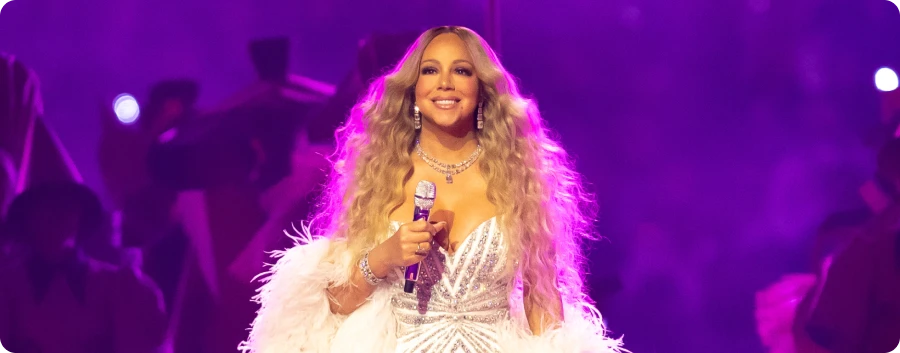
The Milano Cortina 2026 Opening Ceremony didn’t happen in one stadium but unfolded simultaneously across Milano, Cortina, Livigno, and Predazzo — the first Widespread Ceremony in Olympic history. Four cities, one narrative, one shared moment. The unifying idea was armonia: bringing together what is different. Every location added its own voice to a single score.
What held it together: a single creative concept that each location expressed differently, rather than duplicated.
WALTZ INTO SPACE
13 billion
impressions
6,500+
media reports
All 13,743 notes
claimed by participants from 92 countries
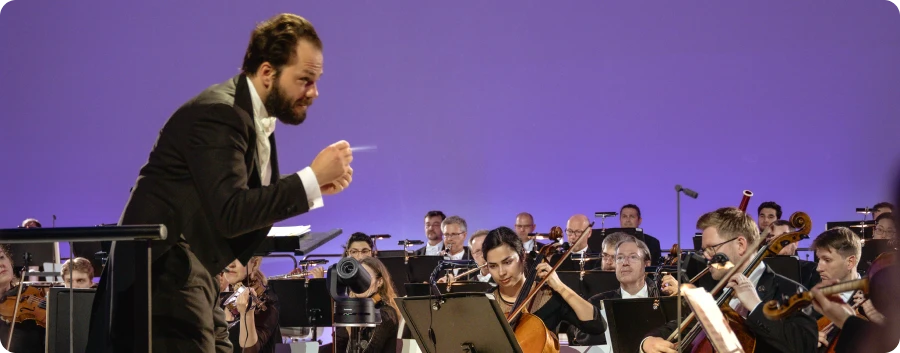
WienTourismus, Stargate Group, and Jung von Matt DONAU built a year-long platform around one surprising fact: The Blue Danube Waltz had never been transmitted into space. The 1977 Voyager Golden Records left it off. In partnership with the European Space Agency, they corrected that omission — live, with the Vienna Symphony Orchestra performing while ESA’s Deep Space Antenna simultaneously broadcast the signal toward Voyager 1. Anyone in the world could claim one of the waltz’s 13,743 notes and send their name into space alongside it.
What held it together: one historical mistake to correct, turned into a global participation platform.
Corona: Beach 100
527.9 million
social impressions
$2.8 million
in earned social value
Two million
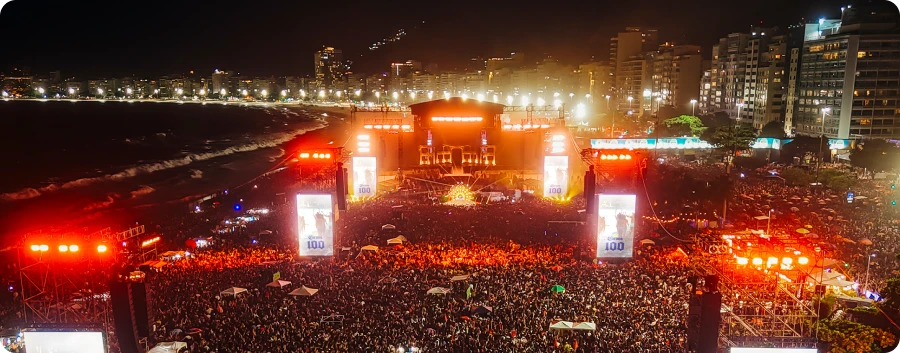
person finale on Copacabana
For its centenary, Corona didn’t stage a brand anniversary event. WINK Creative Experiential Agency built a year-long global celebration of the world’s most iconic beaches that ran across continents before culminating in a Copacabana finale that drew more than two million people.
What held it together: the brand spent its centenary pointing at the beach, not at itself. The idea was bigger than the anniversary, and that ensured its year-long duration and long-term impact.
How to build an event idea that travels
Design the central idea before anything else. The temptation with distributed formats is to start with the map — how many cities, which markets, what dates. But the idea for the multi-location event needs to exist before any location is chosen to make the entire venture sustainable.
Give each location a distinct role. The strongest distributed work doesn't duplicate the same activation in different postcodes. Each location adds something the others don't, be it a different voice, audience, or a different moment in the story's arc.
Build participation and content distribution into the platform from the start. WALTZ INTO SPACE gave anyone in the world a way to be part of the moment — not just the people in Vienna. That designed participation is what turns a distributed event into a genuinely global platform, rather than a series of local ones.
Plan how the story accumulates over time. The best platform work is designed so that each moment adds to the weight of what came before. The Copacabana finale meant more because of everything Corona had built across the year.
Explore more insights from the Eventex Excellence Report 2026
Multi-location and extended-calendar thinking is one of six dimensions separating award-winning events from the rest. The Eventex Excellence Report 2026 explores the patterns, data, and case studies behind the world’s most outstanding events and experiences.
A multi-location event strategy distributes a single creative idea across several cities, venues, or timeframes — rather than staging one event in one place. The strongest examples in Eventex Awards 2026 share one thing: a clear central concept that each location expresses differently, rather than duplicating the same activation across markets.
How do you keep a distributed event idea coherent across multiple locations?
By defining the central idea before planning any location. The agencies behind the strongest platform work in 2026 started with the idea and built every location, every activation, and every audience touchpoint around it. Scale without that creative anchor tends to dilute the idea rather than amplify it.
What is the difference between a multi-location event and an event platform?
A multi-location event happens in several places. An event platform is a sustained creative idea that accumulates meaning across locations, timeframes, and audience touchpoints over time. Corona: Beach 100 is an event platform — a year-long idea with a global footprint that culminated in a two-million-person finale.
How do you build audience participation into a distributed event platform?
By designing participation that works at a distance — not just on the night, in the room. WALTZ INTO SPACE gave anyone in the world a way to claim one of the waltz’s 13,743 notes and send their name into space alongside it.
What makes a year-long event platform work creatively?
Three things, based on this year’s data: a central idea strong enough to sustain attention across twelve months; a series of moments that each add something new rather than repeating the same beat; and a participation mechanic that gives the audience a role at every stage.
What are examples of successful multi-location event campaigns?
The 2026 Eventex Awards recognized three strong examples: the Milano Cortina 2026 Opening Ceremony, which unfolded simultaneously across four cities and was watched by 2.5 billion viewers; WALTZ INTO SPACE, a year-long platform that corrected a 48-year-old historical omission and generated 13 billion impressions across 92 countries; and Corona: Beach 100, a centenary platform that culminated in a two-million-person finale on Copacabana.
What is an event platform?
An event platform is a sustained creative idea designed to accumulate meaning and reach across multiple locations, timeframes, and audience touchpoints — rather than delivering a single moment. The distinction from a multi-location event is duration and intentional story-building: each activation adds to what came before, rather than standing alone.
Never miss an insight worth reading.
By providing your contact information, you agree to our Privacy policy, and you authorize Eventex Awards to contact you with more relevant information about the awards. You can unsubscribe at any time via the “Unsubscribe” button at the end of each email.
Events industry insight genuinely worth reading right now, at the right time
Get industry insights, early access to reports, and valuable content straight to your inbox.
Written by:
Tsveta van Son
Copywriting specialist
An experienced copywriter, editor, and translator, Tsveta writes for Eventex where she covers everything from experience marketing trends to the stories behind the event industry's top award-winning campaigns. With a background in journalism and a soft spot for Icelandic grammar, she believes the best content is precise, useful, and never boring.
.svg)
.svg)





.webp)