How award-winning experiences make the audience part of the story
Tsveta van Son
August 28, 2026
Read time:
min
Audience participation in events used to mean a photo booth or a voting app — something added on, optional, easy to remove. The world's best events, however, have moved on. The Eventex Excellence Report 2026 shows just how significant that shift has become: 35.3% of Platinum-winning entries in the latest edition of Eventex Awards built play-as-format into the heart of the experience, compared to just 2.5% of non-winning entries.
Here is what that looks like when it is done right — and how to build it into your next project.
Participation as feature vs. participation as format
The distinction is worth making clearly.
A participation feature is additive:
It sits alongside the experience without changing what happens if you remove it
A gamified leaderboard no one checks. A live poll that influences nothing.
Remove it, and the event runs exactly the same.
A participatory format is structural:
Remove it, and the experience no longer works
The audience's action doesn't respond to the event — it produces it
Three of this year's most recognized entries show what that looks like in practice.
Participation that changed behavior
Cisco GSX FY26
18,000
attendees
26%
rise in Sales Confidence Index scores year over year
97%
left with an actionable next step for a customer
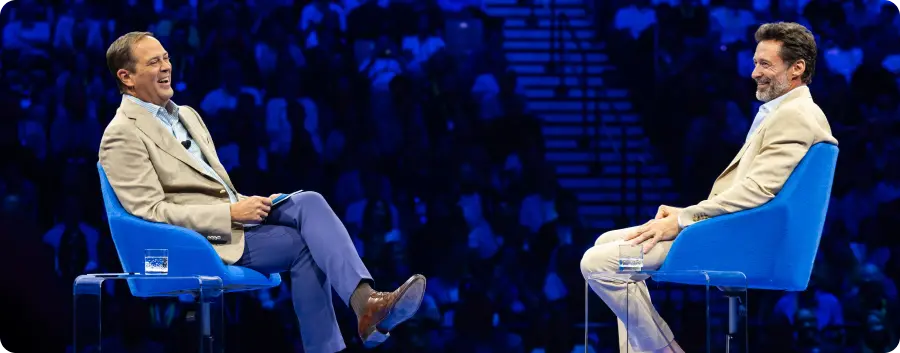
Eighteen thousand sellers, one mobile app. Quest challenged attendees to complete eight role-specific missions, earn AR crowns, and unlock exclusive rewards — turning a global sales meeting into a personal learning journey. A Cisco AI Assistant offered tailored content and wayfinding across the venue. Participation at this scale didn’t just engage — it changed how people work.
The Eventex Excellence Report 2026
Six dimensions. The patterns and actionable insight from award-winning entries — all in one place
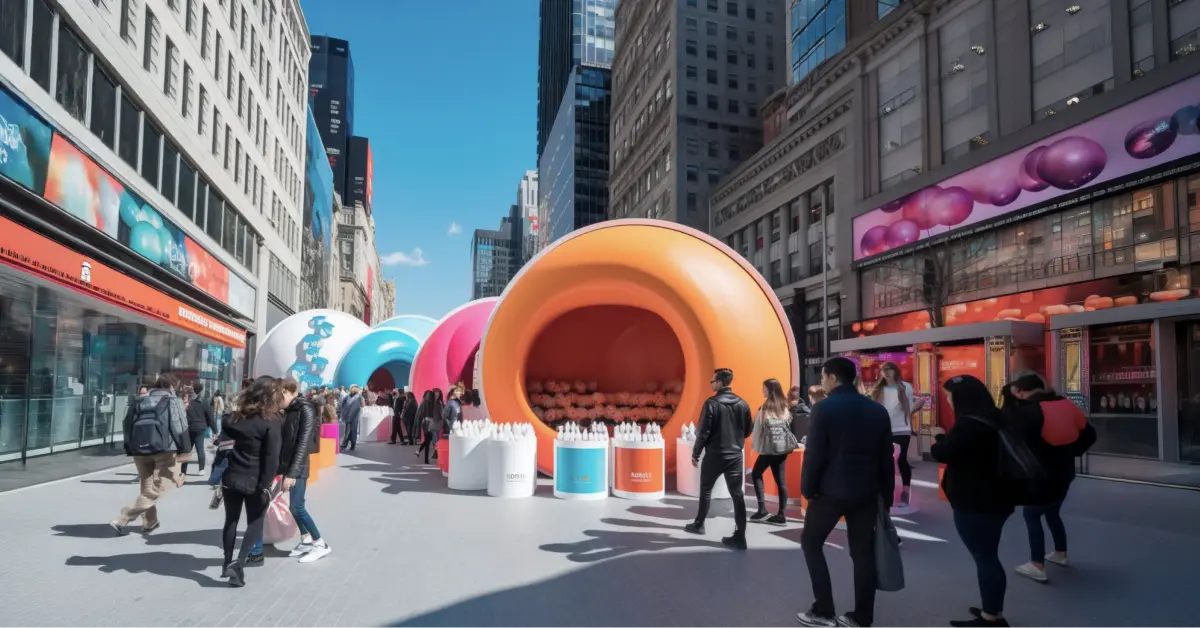
CUDO turned a five-storey department store into a playable story arc, each floor a distinct narrative chapter. Walls reacted to visitors. Bikes had to be pedalled to close a rift. The audience didn’t watch the story — they caused it to move. Those 13.1 million impressions were driven almost entirely by participants sharing what they had personally done inside the world.
Participation that rewrote a building
McDonald’s Poland
~50,000
visitors across eight days
~3,000
times the building was colored live
Day 1
record for the highest sales & traffic in McDonald’s Poland’s history
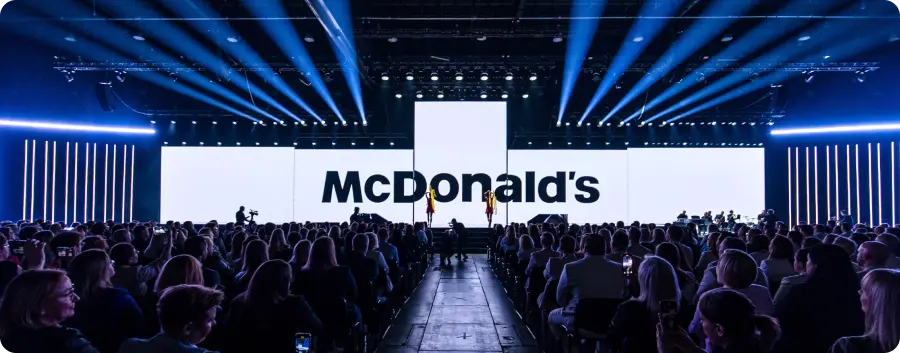
A Wrocław restaurant wrapped in black-and-white illustrations. A street-facing digital interface let anyone color it in, in real time. The building changed appearance throughout the day, shaped entirely by the people who walked up to it. The mechanic was simple. Its effect was not.
How to design meaningful audience participation
Now, let’s take a look at what the most participated-in events have in common. Across every sector and scale in this year's data, four design decisions consistently separate the work that lands from the work that merely pleases — and all of them can be built into your next brief.
Give the audience a clear role before designing anything else - This is the decision that separates participatory design from participation as an afterthought. When the audience's role is defined at the brief stage, every subsequent creative decision — the environment, the interface, the narrative arc — can be built to support it. When it's added after the concept is locked, it will always feel bolted on, because it is.The strongest work in 2026 didn't treat participation as a feature to layer in but as the foundation to build from.
Make the interface immediately understandable - Visitors to this year’s award-winning events and experiences knew what to do from the get-go because the environment made the next action obvious — a coloring interface on a black-and-white building, a flashlight that reveals what the naked eye cannot see, a bike that has to be pedalled to close a rift. The moment an audience member has to ask how to participate, the spell is broken. This means simplicity is a condition rather than a constraint for creativity.
Make participation matter beyond the moment - A badge is not a consequence. The best entries made audience action the thing that moved the story forward, changed how the space looked, or unlocked the next stage of the experience. When participation has real stakes — even small ones — it earns real attention. The question worth asking at the design stage is not "what do we give the audience to do?" but "what happens because they did it?"
Measure what people did, not only whether they enjoyed it - Satisfaction scores tell you whether the audience was happy. They don't tell you whether the experience changed anything. Mission completion rates, behavioral index scores, first-party registrations, and organic content generation all measure participation in terms that connect to business outcomes. Define those metrics before the event — and build the participation mechanics around them. The difference between an engaging experience and a strategically valuable one is often just that one decision made early enough.
Audience participation is just one of six dimensions
The Eventex Excellence Report 2026 outlines the patterns, data, and case studies behind the world’s most outstanding events and experiences.
Play-as-format means designing the experience so that audience action is structurally necessary to how it unfolds — not adding a game layer on top of a passive event. The audience’s role isn’t a response to the experience; it’s what produces it.
What are examples of participatory event design?
Eventex Awards 2026 recognized several strong examples: Cisco GSX FY26 built a mission-based game into an 18,000-person sales meeting and saw a 26% rise in behavioral index scores; CUDO’s Stranger Things experience in Warsaw made visitor action the engine of the narrative; and McDonald’s Poland handed the public real-time authorship over a physical building. All three treated participation as the format, not the feature.
Is gamification effective for events?
Play-as-format is the single strongest differentiator between Platinum-winning and non-winning work in Eventex Awards 2026 — stronger than AI, stronger than scale, stronger than architecture. What the best work demonstrates isn’t gamification in the superficial sense; it’s participatory design, where the experience is built around what the audience does rather than what they watch.
Does this only work for consumer-facing events?
Cisco GSX is the clearest answer: an 18,000-person B2B sales meeting, a 26% year-over-year rise in Sales Confidence Index scores, achieved through participatory design. The mechanics look different in a corporate context, but the principle is identical.
How do you sell participatory design to a skeptical client?
Lead with outcomes. A client skeptical of “gamification” will respond to a 26% behavior change index, a sold-out experience with 13 million organic impressions, and record single-day sales. The mechanic is how you get there — the business result is the conversation opener.
What’s the most common mistake agencies make with participatory event design?
Adding participation last. When it’s designed after the core concept is locked, it feels optional — because structurally, it is. Define the audience’s role at the brief stage, not the production stage.
How do you measure the ROI of participatory event design?
Define what the participation is designed to change, then measure that specifically. Cisco measured behavioral index scores. McDonald’s measured footfall and same-day sales. CUDO measured organic reach. All three defined a measurable outcome before the event. Participation without a measurement framework is activity. With one, it’s strategy.
How do you design audience participation at an event?
Define what the audience does before the concept is locked, then make that action produce something — the next stage, a visible change, the story moving forward. Eventex reads the 2026 data as four decisions in order: give the audience a role at the brief stage, make the next action obvious without instruction, give that action a consequence, and define the metric it’s meant to move before the event runs.
What’s the minimum viable participation mechanic?
One action, understandable without instruction, that changes something other people can see. McDonald’s Poland sits close to the floor: a custom digital interface on site let passers-by color in a black-and-white building, and the façade changed roughly 3,000 times across eight days. No app, no login, one gesture with a visible result.
Never miss an insight worth reading.
By providing your contact information, you agree to our Privacy policy, and you authorize Eventex Awards to contact you with more relevant information about the awards. You can unsubscribe at any time via the “Unsubscribe” button at the end of each email.
Events industry insight genuinely worth reading right now, at the right time
Get industry insights, early access to reports, and valuable content straight to your inbox.
Written by:
Tsveta van Son
Copywriting specialist
An experienced copywriter, editor, and translator, Tsveta writes for Eventex where she covers everything from experience marketing trends to the stories behind the event industry's top award-winning campaigns. With a background in journalism and a soft spot for Icelandic grammar, she believes the best content is precise, useful, and never boring.
Table of contents
Explore the Eventex Excellence Report 2026
See what separates winning entries from the rest
Get insight on strategies and trends that win awards
Use the award-winning patterns to elevate your own work
.svg)
.svg)







.webp)