Mission-led events: how to build the cause into the format
Tsveta van Son
October 2, 2026
Read time:
min
Most cause-led events follow the same structure: a conventional format such as a gala, a conference, a brand activation, and a purpose message layered on top. Remove the cause, and the event still runs.
The most distinctive mission-led work in Eventex Awards 2026 was built on the opposite logic. Remove the cause, and there is no event. Here's how that works, and how to build it into your next brief.
The distinction that matters
Among Gold-winning entries in Eventex Awards 2026, mission-led formats were nearly four times more prevalent than among non-winning entries. The approach remains rare across the full field, which is part of what makes it stand out when it appears.
Cause-as-wrapper is easy to recognize. A charity gala with a moving video. A sustainability conference with a carbon-offset badge. While worthy, they are not what this article is about.
Cause-as-format is different. The audience doesn't leave having heard about the cause; they leave having briefly lived inside it. That distinction changes everything about how the event is designed and how it's measured.
What mission-led format design looks like
Two of this year's most recognized mission-led entries demonstrate the principle at very different scales.
Ujjivan Small Finance Bank — Sound of Diwali
800
audio Sound Diyas created and distributed to 800 visually impaired beneficiaries
2,000+
participants across 7 locations in Uttar Pradesh and Delhi NCR
100%
conversion from public participation to verified social contribution
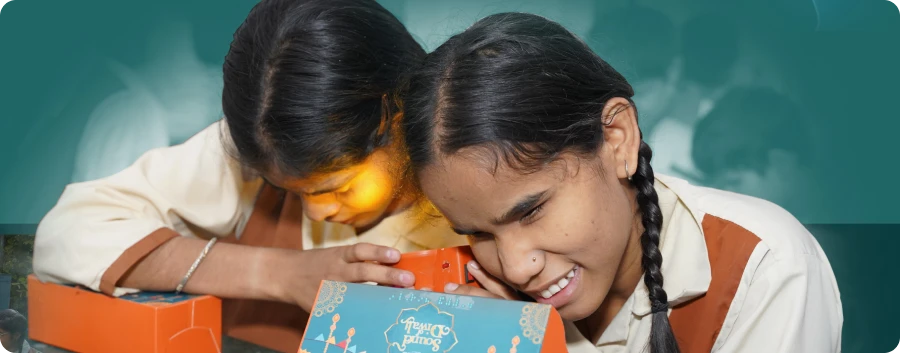
Diwali is known as the Festival of Lights. For visually impaired people, the festival is experienced entirely through sound and touch. Impact Communications and Ujjivan Small Finance Bank built an experience that asked sighted participants to step into that reality, even briefly.
The centerpiece was a VR headset that showed nothing at all — the screen stayed blank. What participants heard instead was Diwali in sound. They then recorded personal Diwali greetings into audio-enabled Sound Diyas — traditional festival lamps reimagined as carriers of voice rather than light. Each recording produced a real device distributed to a visually impaired person through partner institutions.
A national record for the largest distribution of festive audio greeting devices to specially abled individuals
In this case, the format was the cause. Every act of participation produced a direct, traceable outcome for a specific beneficiary.
Forest Mysteries
An audience of 250
at the intersection of policy, ownership, and environmental advocacy
Zero Waste
production with full replanting and repurposing of all natural materials
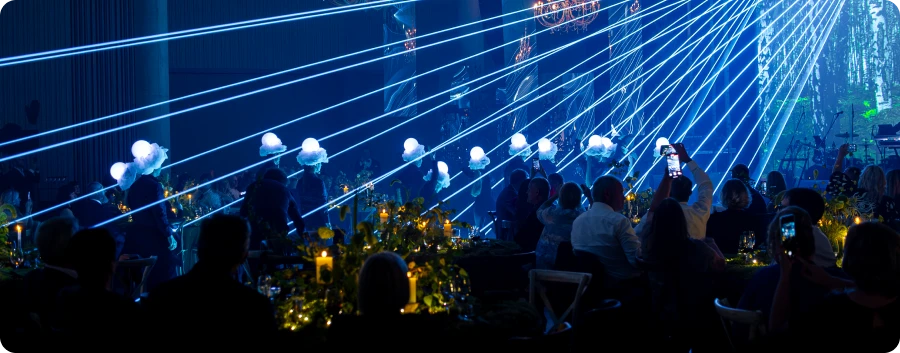
For an audience of 250 forest owners, ministers, EU institution leaders, and the President of Latvia, Luka built a five-hour choreographic gastronomic performance that doesn’t communicate the forest — it becomes the forest. The hall was transformed into a 360-degree forest, with 10-meter birches, moss, and natural elements brought directly from the client’s land.
The experience unfolded across three narrative parts — Awakening, Maturity, Harmony — in which waiters became trees, food transformed into a bird’s nest, fallen leaves were edible, and the audience moved through the room with dishes engineered to retain heat.
A format that made sitting inside the argument for forest conservation — not hearing it
Forest Mysteries turns up again in the Plan B Playbook, taken apart from the other end: a booking error left the team 12 hours to install a 95-hour build.
What made both entries work: the mechanism of how the event functioned was the message it delivered. Neither relied on a speech, a film, or a donation button to make the cause real.
A supporting reference
Mercedes-Benz Türk Health & Care Truck
10
logistics hubs
5,114
drivers
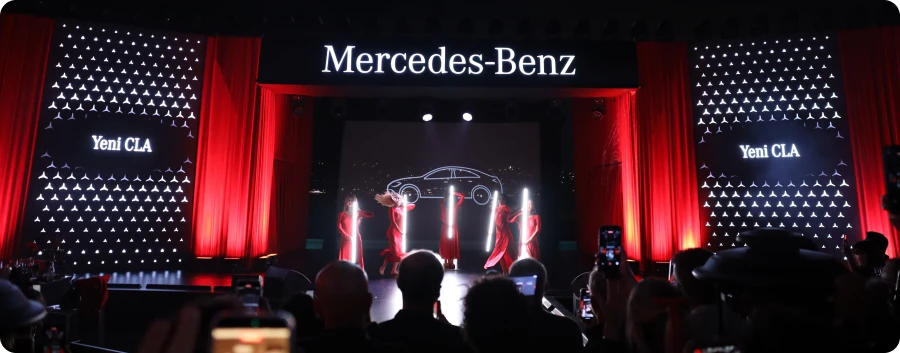
At a different scale and in a different sector, Oksijen’s Health & Care Truck roadshow for Mercedes-Benz Türk demonstrates the same principle applied to a service context.
Rather than organizing a CSR announcement event, the team brought medical examinations, psychological consultations, barber services, and morale support directly to long-haul truck drivers inside their working environment — across 10 logistics hubs, reaching 5,114 drivers. The format was the intervention.
Shared principles behind the strongest mission-led work
Ask whether removing the cause would break the format or merely change the topic. If the event still works without the cause — if it's just a different gala or a different activation. If removing it breaks what the event does, the format is genuinely mission-led.
Design participation so that taking part is the change you want to see. Sound of Diwali asked the participants to record a greeting — and that recording became a real device in a real person's hands. Every act of participation should produce a traceable contribution, not just an emotional response.
Remove a sense, a convention, or a comfort — discomfort builds empathy. The strongest mission-led work in 2026 stripped things back rather than adding spectacle. A VR headset that shows nothing. A gastronomic experience that removes conventional service. Subtraction, not addition, is often the more powerful creative tool.
Measure what the participation produced, not only how it felt. Sound of Diwali had a 100% conversion rate from participation to verified social contribution. The Health & Care Truck tracked examinations, consultations, and sessions delivered. Mission-led design earns its distinction through outcomes, and those outcomes need to be defined before the event.
What this means for the brief
Mission-led format design requires a different kind of creative discipline — and a different kind of client relationship.
The cause needs to be specific enough to move beyond the theme and become a mechanism.
The participation needs to produce something real, not just a feeling.
The creative execution needs to be strong enough to stand on its own — purpose doesn't compensate for weak craft.
If your next brief has a cause in it, the award categories are a quick way to see where that work is judged.
None of this is more inherently worthy than other approaches to event design. But when it works, it produces a category of experience that audiences remember differently from everything else they attend.
Explore more insights from the Eventex Excellence Report 2026
Mission-led formats are one of six dimensions separating award-winning events from the rest. The Eventex Excellence Report 2026 explores the patterns, data, and case studies behind the world’s most outstanding events and experiences.
A mission-led event format is one where the social intervention is delivered by the mechanism of the event itself — not communicated through a speech, a film, or a donation button layered on top. The diagnostic question is simple: if you remove the cause, does the event still work? If it does, the cause is decorative. If removing it breaks what the event does, the format is genuinely mission-led.
What are examples of mission-led event design?
Eventex Awards 2026 recognized two strong examples at opposite ends of the scale. Sound of Diwali by Impact Communications gave sighted participants a blank VR screen and the sounds of Diwali — then turned their recorded greetings into real audio devices distributed to 800 visually impaired beneficiaries, with 100% conversion from participation to verified contribution. Forest Mysteries by Luka built a five-hour choreographic performance where the audience lived inside a forest argument for conservation — zero waste, full replanting, and a format that made the cause structurally inseparable from the experience.
How is cause-led event design different from CSR events?
Most CSR events add a purpose message to a conventional format — a charity element at a gala, a sustainability pledge at a conference. Cause-led format design makes the social intervention the mechanism of the experience. The distinction matters creatively and commercially: when taking part is the change, participation rates and measurable outcomes are structurally built in, rather than dependent on optional add-ons.
How do you measure the impact of a mission-led event?
By defining what the participation is designed to produce before the event runs — then measuring that specifically. Sound of Diwali measured the number of audio devices distributed to verified beneficiaries. The Mercedes-Benz Türk Health & Care Truck tracked medical examinations, psychological consultations, and sessions delivered per location. Emotional response and satisfaction scores are not sufficient on their own — mission-led design earns its distinction through traceable outcomes.
Does purpose-driven event design perform better at awards?
Across the 1,405 entries from 58 countries in Eventex Awards 2026, mission-led formats were nearly four times more prevalent among Gold-winning events than among non-winning entries. That is a correlation, not a cause — purpose doesn’t automatically elevate an event, and the strongest mission-led entries in this year’s data were exceptional creative work in their own right. What the data suggests is that when a cause is built into the format with genuine craft and strategic discipline, the work tends to reach a different level.
What’s the most common mistake in cause-led event design?
Treating the cause as a theme rather than a mechanism. When the cause is a wrapper — a message the event carries rather than a function the event performs — it tends to feel like an add-on, because structurally it is. The strongest mission-led work makes the cause load-bearing: remove it, and the format collapses.
How do you stop a CSR event feeling like a box-tick?
Make the cause load-bearing instead of decorative. The test is whether removing it breaks the format. At Eventex Awards 2026, Sound of Diwali turned each participant’s recorded greeting into a physical audio device delivered to a named beneficiary, so taking part and contributing were the same act. When participation produces the outcome, there is no box left to tick.
Never miss an insight worth reading.
By providing your contact information, you agree to our Privacy policy, and you authorize Eventex Awards to contact you with more relevant information about the awards. You can unsubscribe at any time via the “Unsubscribe” button at the end of each email.
Events industry insight genuinely worth reading right now, at the right time
Get industry insights, early access to reports, and valuable content straight to your inbox.
Written by:
Tsveta van Son
Copywriting specialist
An experienced copywriter, editor, and translator, Tsveta writes for Eventex where she covers everything from experience marketing trends to the stories behind the event industry's top award-winning campaigns. With a background in journalism and a soft spot for Icelandic grammar, she believes the best content is precise, useful, and never boring.
Table of contents
Explore the Eventex Excellence Report 2027
See what separates winning entries from the rest
Get insight on strategies and trends that win awards
Use the award-winning patterns to elevate your own work
.svg)
.svg)





.webp)
.webp)


