Crisis-management strategies from award-winning events and experiences.
Every event professional knows the feeling: the keynote speaker cancels an hour before showtime, the venue loses power, a supplier vanishes, or a headline event turns from asset to liability overnight. What separates the teams that recover from those that unravel is rarely luck. It’s preparation.
About this playbook
This playbook is built entirely on real Eventex Awards entries — projects recognized by the industry not just for their excellence but also for how their teams responded when things went sideways.
Nothing here is theoretical — it’s either a record of genuine crises and how experienced teams managed them in the moment, or contingency strategies winning teams put in place before anything went wrong.
Use it as a reference, a training tool, or a checklist for your next brief. Because the best time to write your Plan B is long before you need it.
Methodology
We examined every winning Eventex Awards 2026 entry, or 925 entries in total. We identified 110 crisis-management strategies, including 40 real handled crises and 70 contingency strategies put in place.
Crisis approach
Strategies
Projects
Technical, AV & Power Failure
34
28
Logistics, Venue Build & Permits
23
17
Weather & Force Majeure
17
17
Health, Safety & Security
11
9
Last-Minute Program Changes
8
7
Crowd, Access & Capacity
7
7
Staffing & Crew
7
7
Supplier, Sponsor & Financial
3
3
Technical, AV & Power Failure
A single dead server, a WiFi drop, or a grid blackout can freeze a show in front of thousands. The strongest teams in this pool don’t hope the technology holds — they build a second path for every critical signal, from playback files to power to the network that carries the stream.
Applicable strategies
Generate your own power instead of trusting the grid or the venue
For touring or outdoor activations on sites with no dedicated event supply, run every unit off brand-owned generators so location and climate never threaten the AV.
Carry your own broadcast path that doesn’t depend on venue WiFi
For any streamed or hybrid moment, route the feed over a dedicated cellular bonding device — a box that combines several cellular radios into one reliable connection — so your production never rides on the building’s network.
When two stages face each other in one open room, build a dedicated elevated control position that sees both
Engineer a control platform above a central point that gives operators sightlines to both stages and enables real-time audio and lighting direction, so phase conflict (competing sound waves that muddy the audio) and dispersion get managed before they become audible.
Stress-test the whole rig under real conditions before doors open
Book a full day to run demos, feeds, and control systems at live traffic levels so faults surface while the room is empty.
Keep the offline function running locally when the network dies, then sync when it returns
Design guest-facing systems — check-in, access control, verification — to process at the edge device so a connectivity loss doesn’t create a queue at the door.
Give the crew enough system depth to patch software live without pausing the show
Thorough pre-production builds the fluency to reroute a workflow mid-broadcast and helps solve issues without visible impact to the broadcast or program schedule.
Mirror your playback and show-control on a duplicate machine, and keep an identical copy of every show file
Run a primary server and a hot backup loaded with the same content, so a single hardware fault or corrupted file swaps over without stopping the show. For non-repeatable moments, rehearse the failover.
Keep spare hardware on-site for a fast physical swap
Pre-position identical LED panels, projectors, or control machines so a dead unit is replaced in minutes rather than sourced in a panic. Pair this with dual redundant channels for wireless audio when metal scenery moves and shifts the RF environment.
Real-life examples
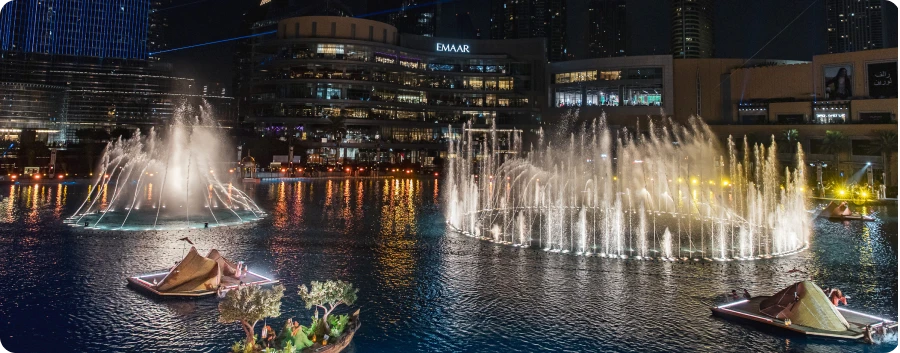
Aqua Drones: World First for Dubai New Year’s Eve Show at Burj Khalifa Fountain
Agency
Our Legacy Creation
Country
🇦🇪 United Arab Emirates
Selected Award
GoldUse of Technology
Autonomous floating platforms carried live performers across the Burj Khalifa Lake, where a navigation error in a dense GPS and RF environment could turn dangerous. The team combined a manual kill-switch and continuous live monitoring with an on-site rehearsal period that caught minor signal fluctuations early and fixed them in software before the live run.
Operating in an extremely dense GPS & RF environment required contingency planning. A dedicated kill-switch, real-time monitoring tools, and on-site technical teams ensured immediate response capability, contributing to a 95% operational success rate across eight consecutive performances.
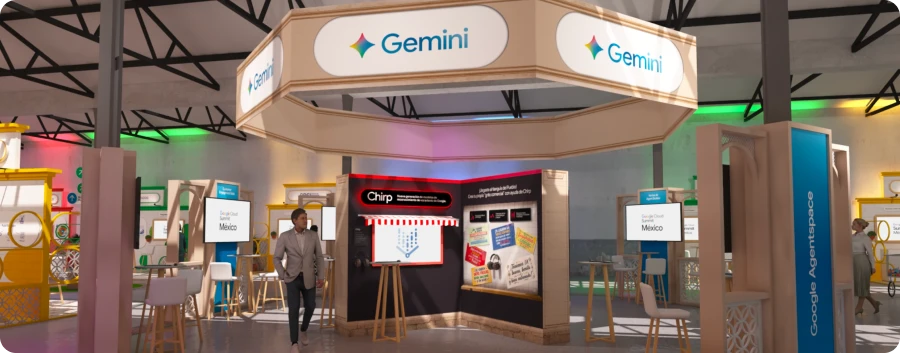
Google Cloud Summit Mexico 2025
Agency
RED DOOR AGENCY
Country
🇲🇽 Mexico
Selected Award
PlatinumSummit
Live GenAI demos risked failing unpredictably under high traffic in front of the room. The agency ran a full 12-hour dress rehearsal at load before opening the doors, syncing announcer cues and technical prompts to prove the demos held.
The 12-Hour “Day 0”: To ensure 100% stability of GenAI demos under high traffic, 12-hour stress test, synchronizing “Voice of God” cues and technical prompts was conducted.
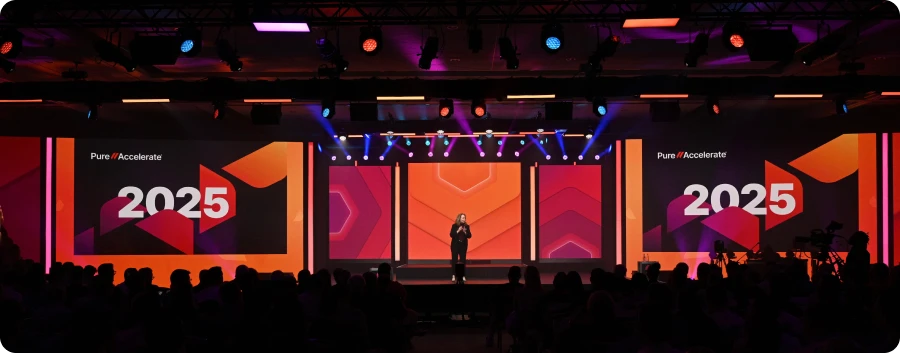
Pure//Accelerate 2025
Agency
Pure Storage
Country
🇺🇸 United States
Selected Award
BronzeSet Design Solution
Moving LED and metal set pieces changed the RF environment with each configuration, and the whole hybrid stream depended on the venue’s network. Pure Storage answered both risks at once — an independent cellular broadcast path off the WiFi, plus doubled wireless mic channels with headroom to absorb the shifting RF.
A broadcast-quality hybrid infrastructure included a Dejero 6-radio cellular network operating independently of venue WiFi, dual vMix P620 systems, a 3-camera HD package, and 500 feet of tactical fiber.
Century City Conference Centre
Agency
Century City Conference Centre and Hotels
Country
🇿🇦 South Africa
Selected Award
SilverLarge Venue
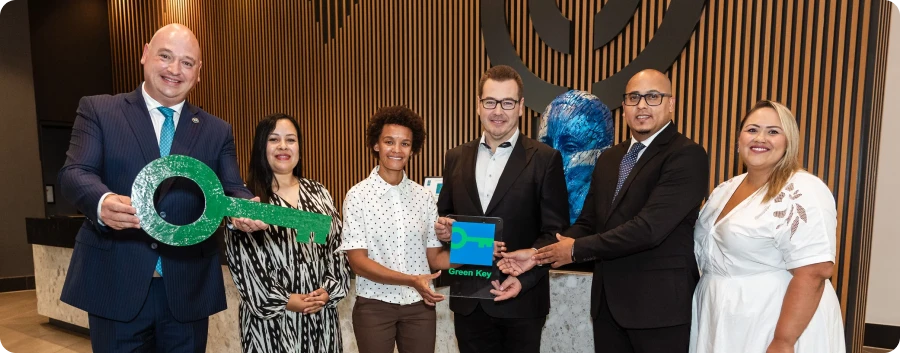
South Africa’s rolling blackouts threaten any venue that runs AV, climate control, and lighting off the grid. The centre invested in on-site solar backup rather than relying on the national supply to hold.
In 2024, the company invested R1 million to expand its solar capacity by 60.5 kWp. Today, its expanded solar array meets approximately 25% of its operational energy needs, ensuring they remain a beacon of productivity even during national grid challenges.
Logistics, Venue Build & Permits
The gap between a floor plan on paper and a raw venue at load-in is something that can make or break an event. The strongest teams treat physical constraints — a shrunken build window, a pulled permit, a prop that won’t fit the elevator, a strike that kills the Metro — something to engineer around, fast.
Applicable strategies
Stand up a full private shuttle network when public transit is at risk, and build it by running every workstream in parallel
Analyze hotels and routes, source fleet, staff the operation, coordinate with the venue and draft attendee communications all at once instead of in sequence.
When you’re pushed to a low-traffic corner, engineer the space into a destination people cross the floor to reach
Instead of relying on foot traffic, use distinctive architecture and a live proof-point demo to pull attendees in.
When a venue’s load limit turns out lower than planned, rebuild the rig around lighter gear
Swap in lightweight equipment from the approved supplier to meet the new weight ceiling while keeping the signed-off storyboard look intact.
Redesign the technical and structural plan the moment a physical constraint surfaces
When rigging capacity, access points, or venue geometry turn out different from the drawings, rework the build rather than force the original plan through.
Cut on-site load-in by pre-fabricating off-site
When the venue only opens a narrow window, build finished modules elsewhere and arrive ready to assemble.
Size for the worst case, because it is easier to scale down than scale up
Provision for maximum expected demand and hold reserve capacity with flexible routing. When actual usage exceeds expectations, your safety net will be there to absorb the impact.
Right-size the contingency before you build it
Classify every location by walking feasibility first, so you only build routes where transport is genuinely needed.
Reroute guest transport in real time and tell guests before they notice
Keep a pre-defined response framework and a push-communication channel (such as the event app) ready so operations can divert arrivals when civic disruption blocks a planned route.
Keep backup vehicles on standby and cushion any delay with a human gesture
A mechanical failure becomes a non-event if a swap-in vehicle is ready and the inconvenience is softened with amenities along the lines of drinks, snacks, etc.
Real-life examples
Transport contingency plan for massive general strike in Paris
Agency
bnetwork
Country
🇫🇷 France
Selected Award
BronzePlan B
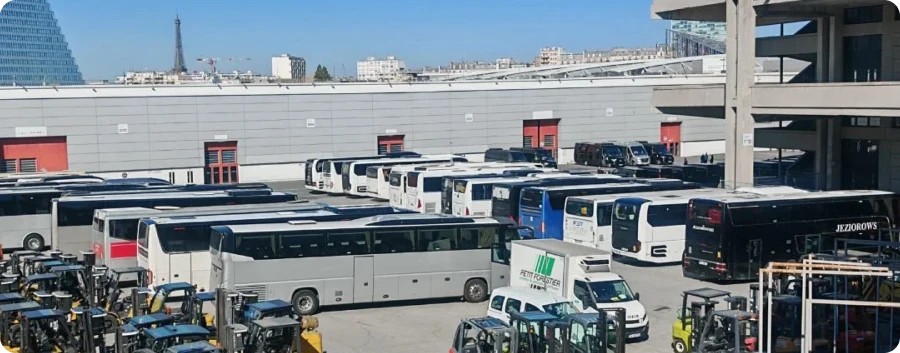
A general strike threatened to strand 20,000 EADV Congress attendees from a disrupted Paris Metro, with just 10 days’ notice.
Running hotel analysis, fleet sourcing, staffing and communications in parallel, bnetwork built a private shuttle network sized for the worst case; approximately 1,800 attendees used it on the day, with no session cancellations, speaker delays, or stranded attendees.
Cisco at Mobile World Congress 2025
Agency
Cisco Systems, Inc.
Country
🇪🇸 Spain
Selected Award
BronzeExhibition Experience
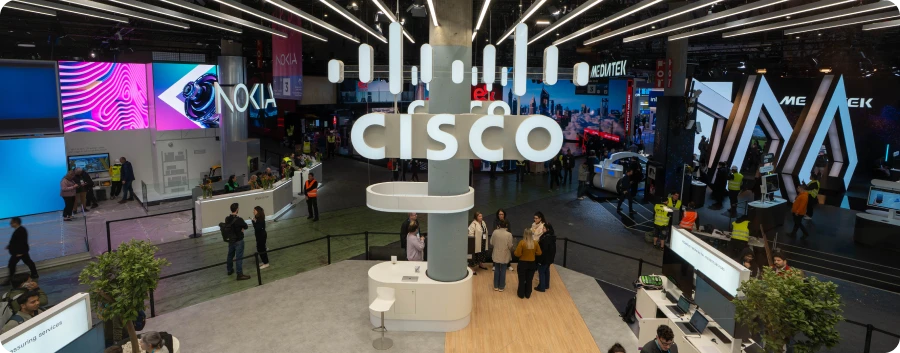
Told shortly before MWC 2025 that its booth was being shifted to a peripheral, low-traffic spot at the end of the hall, Cisco engineered the stand into a destination in its own right — a bright canopy of white backlit logos and minimalist architecture designed to pull attendees across the floor.
The event achieved 509 executive meetings (vs. target 450) and 2,465 unique scans (vs. target 2,000).
NBA Phoenix Suns CEO Gala Dinner
Agency
MCI Hong Kong & Macau
Country
🇲🇴 Macao SAR China
Selected Award
BronzeGala
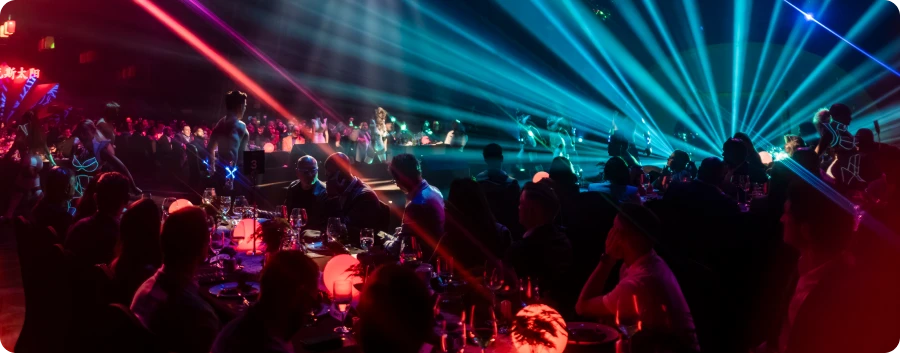
With no traditional gala venues available, the team took the only option left — the bare performance stage of The Venetian Theatre — and built full dining and production infrastructure from scratch, redesigning the guest journey around the unusual layout inside a strict 90-minute delivery window.
It hosted 200 VIP guests on schedule with zero operational disruptions or safety incidents, and earned an 87%+ recommendation rate.
Forest mysteries
Agency
Luka
Country
🇱🇻 Latvia
Selected Award
Grand PrixEvent
A booking error let the production team into the venue only 12 hours before doors, collapsing an estimated 95-hour assembly into six.
They still delivered the full 360-degree scenography, 60 costumes, 60 headpieces, and complex multimedia installations, and the event ran successfully for 250 guests.
Weather & Force Majeure
The moment you commit to an outdoor or open-air program, you take on a set of risks you cannot negotiate with — and award-winning agencies treat that not as a gamble but as an engineering and decision problem to be solved in advance.
Applicable strategies
Layer several complete contingency plans by severity, each with its own activation window
Don’t rely on one binary switch — prepare a primary plan, a full alternate “rain plan,” and a same-day delayed-start option for morning-of uncertainty.
Engineer temporary structures to survive the weather rather than dodge it
Design booths, stages, LED backdrops, tenting, and decoration specifically for heavy rain, storm, and wind, so the build proceeds and the finished structure holds.
Weatherproof and stress-test your show technology so the broadcast never stops
Build LED panels, wearables, lighting, and video-sync systems to run under adverse conditions, and keep the broadcast feed uninterrupted regardless of what’s happening on site.
Prepare a full indoor version of your outdoor program in advance and switch on a defined trigger
Have the alternate venue or indoor room staged and ready so activation is a decision, not an improvisation — with a fixed activation window.
Pair real-time weather monitoring with a pre-agreed decision framework so a relocation is invisible to guests
Watch conditions live, and when the framework triggers, move the affected program element indoors fast and cleanly enough that attendees never notice.
Set a formal go/no-go hierarchy tied to weather thresholds for aerial and pyro elements
Define the exact wind and rain conditions that trigger launch, delay, or cancellation for drone, laser, and firework shows before the day, so the call is made against clear criteria rather than nerves.
Extend weather thinking to travel and logistics, not just the site
Hold pre-built charter and alternate-routing options for weather-vulnerable remote airports, and activate them the moment closure is threatened rather than waiting for confirmation.
Keep the event running by adapting live — shift the schedule and protect the crew instead of canceling
Monitor conditions across a multi-day outdoor run and move sessions in real time while enforcing hydration and safety protocols.
Real-life examples
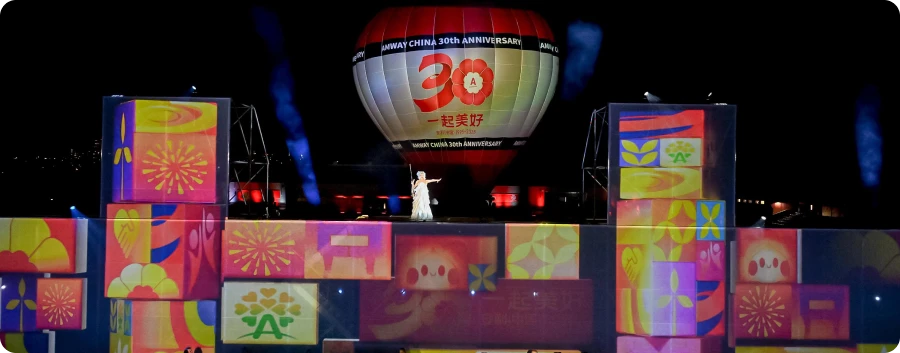
Amway China Leadership Seminar 2025
Agency
Encore Event Technologies
Country
🇦🇺 Australia
Selected Award
GoldIncentive Event
High winds threatened the outdoor finale that had been built into the delegate journey.
Real-time monitoring and weather-based decision frameworks ensured continuity, including the seamless relocation of the outdoor finale indoors due to high winds, without delegate awareness.
The finale proceeded without disruption and with zero safety incidents recorded across the project.
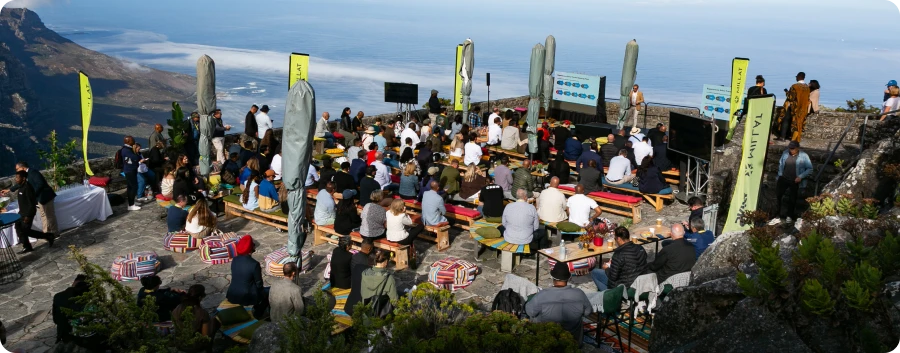
Skift Megatrends Cape Town, hosted by the Millat Group
Agency
Chaos Theory
Country
🇿🇦 South Africa
Selected Award
BronzeB2B Event
A business-critical event staged fully in the open air at 1,100 metres on Table Mountain, with access limited to a public cable car, left the production dangerously exposed to weather.
To mitigate risk, Chaos Theory developed three full operational plans: the primary open-air summit event, a complete alternate “rain plan” event ready to activate within 48 hours, and a delayed-start contingency for unforeseen weather the morning of the event.
The event was executed as planned, described as flawless.
BYD at IAA
Agency
Creative Pro Group
Country
🇵🇱 Poland
Selected Award
BronzeCustomer Engagement Event
Heavy rain and storm conditions hit during the build-up of an outdoor exhibition, damaging other exhibitors’ structures.
However, the booth construction and decoration planning proved to be highly efficient and resilient in dealing with heavy rain and storm conditions.
As a result, BYD’s overall brand representation remained unaffected, unlike several other exhibitors whose booth structures or branding elements suffered damage.
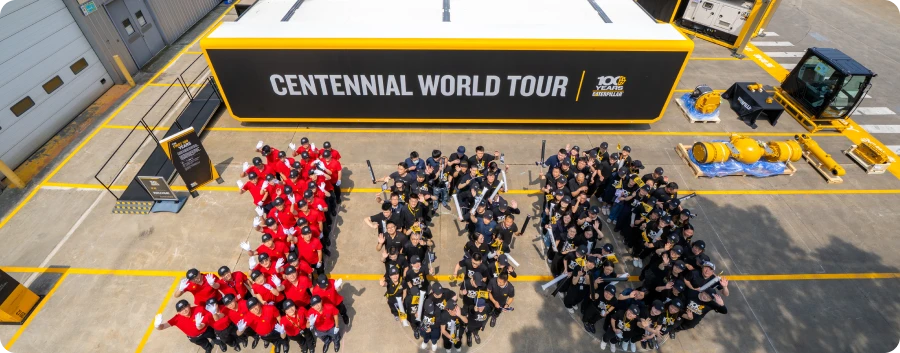
CAT Centennial World Tour
Agency
MC² & History Factory
Country
🇺🇸 United States
Selected Award
BronzeInteractive Outdoor Experience
A year-long tour across 25 countries and five continents, with four touring units running at once, faced wildly varied climates and site conditions.
Given the geographic scale and outdoor execution, risk mitigation was built into the operational model. Redundant power systems, backup digital content, weather contingency layouts, and coordinated local logistics partners ensured reliability across diverse environments.
The tour operated across 138 locations and 214 event days while remaining fully self-powered and adaptable.
Health, Safety & Security
Every event carries a duty of care, but the ambitious ones — festivals of 60,000 fans a day, open-fire cooking in bushfire country, incentive trips at 3,500 meters — carry risks that ordinary crowd planning never touches. The strongest entries here don’t wait for a problem; they build governance, screening, medical readiness and hazard-specific mitigation into the plan long before doors open.
Applicable strategies
Stand up a Unified Command months ahead so every agency shares one chain of command
Formally integrate production, security, fire, EMS, law enforcement and municipal partners under a single operational framework with daily briefings, live dashboards and clear decision thresholds — so an incident triggers coordinated action, not siloed scrambling.
Model your crisis scenarios and watch the ground continuously
Run scenario-based crisis modeling (mapping how specific disruptions could unfold) paired with continuous local monitoring to anticipate problems, then tell delegates openly about safety considerations.
Layer physical screening with live intelligence, not just static checkpoints
Combine perimeter magnetometers (walk-through metal detectors), credential enforcement at artist and production compounds, CCTV, drone response and roaming teams in high-density zones, all feeding one command post with clear escalation.
Build hazard-specific mitigation around the exact local danger
Identify the one environmental risk your location and format create — fire, heat, altitude — and design a targeted response for it rather than a generic safety statement.
Carry a physician and emergency equipment into remote or extreme-condition programs
For high-altitude or far-from-hospital itineraries, send a doctor with the group, backed by oxygen and emergency kit, and pace activities deliberately with acclimatization planning and preventive consultations for every guest months in advance.
Rehearse and review emergency protocols with the venue’s protocol team in the final week
Run two full dress rehearsals to surface technical and artistic faults before showtime, and hold a formal emergency-protocol review with venue and authority teams a week out.
Pre-map emergency care pathways at every stop before you depart
For multi-leg itineraries, identify clinics, evacuation routes and local contacts at each destination in advance, so an incident is handled on the ground without improvisation.
Enforce hospital-grade hygiene on any shared, high-touch equipment during illness season
For multisensory or communal-equipment activations run through flu season, deploy disposable covers on shared gear like headphones, sanitiser at every touchpoint, continuous surface disinfection, and staggered rotation to limit contact density.
Real-life examples
Omnilife Viaje Diamantes 2025: India — Maldivas
Agency
Creative Travel Pvt. Ltd.
Country
🇮🇳 India
Selected Award
PlatinumIncentive Travel Experience
Taking incentive guests to 3,500 meters in winter Ladakh, far from major hospital infrastructure, created genuine risk of altitude sickness.
Each participant received a High-Altitude Guide, preventive medical consultation, and acclimatization planning.
A physician travelled with the group, supported by oxygen and emergency equipment. Activities were paced deliberately; no hospitalization was required despite extreme conditions.
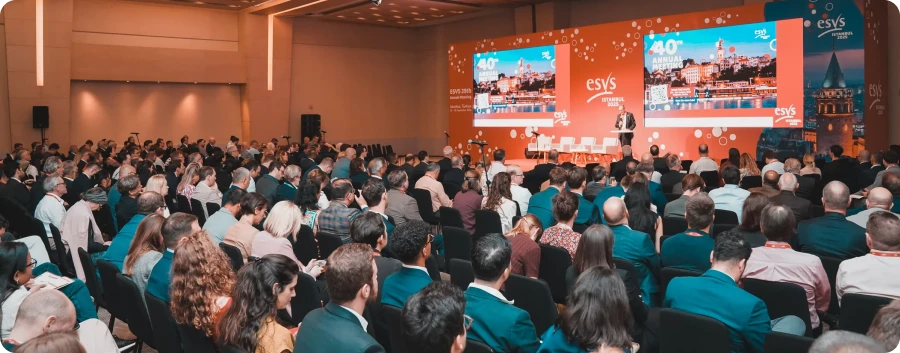
ESVS Annual Meeting 2025
Agency
Congress by design
Country
🇹🇷 Türkiye
Selected Award
SilverScientific Event
This edition in Istanbul required advanced risk planning due to geopolitical tensions and strict regulations.
The agency implemented scenario-based crisis modelling combined with continuous local monitoring to anticipate disruptions. Proactive communication ensured delegates were informed about safety considerations.
Also, detailed customs and transport compliance planning was put in place to manage strict regulations and prevent operational delays.
Redrock Entertainment
Agency
C3 & Redrock Entertainment
Country
🇺🇸 United States
Selected Award
BronzeEvent Health & Safety
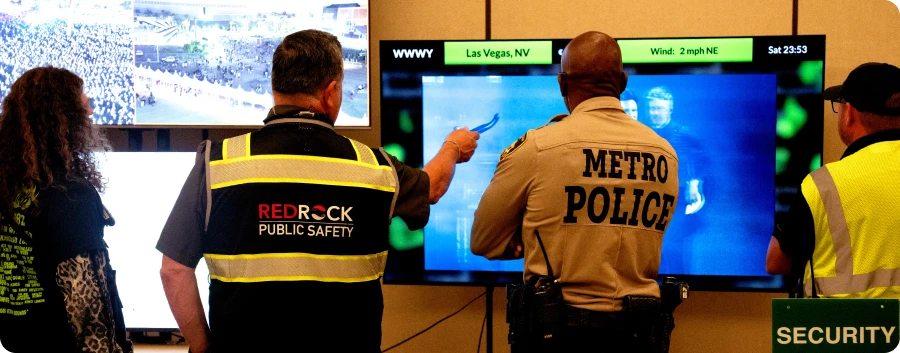
Three months prior to the festival, the agency established a Unified Command structure that integrated production, security, fire, EMS, law enforcement and municipal partners under one operational framework.
This created shared situational awareness designed to anticipate risk rather than react to it.
Pair’d Margaret River Region
Agency
We Are Gather, Mellen Events, Ahoy Management
Country
🇦🇺 Australia
Selected Award
SilverFestival
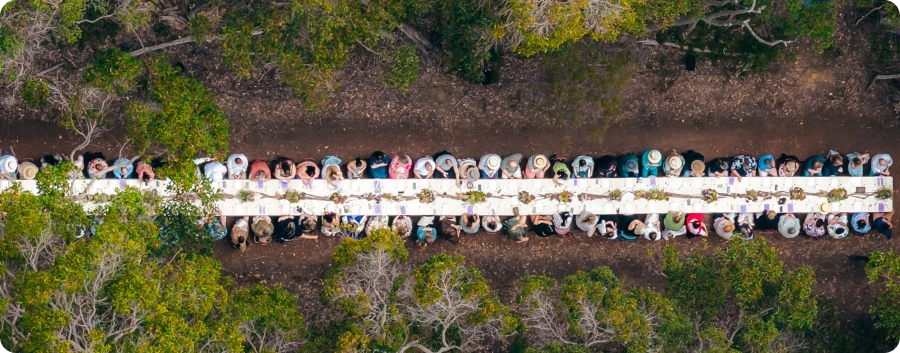
Staging an open-fire culinary experience in a region with genuine bushfire risk demanded more than a permit.
The team built a fire management plan directly with local fire authorities, ran onsite safety protocols, and monitored weather in real time so conditions could force a shutdown — and delivered the fire event within a program that was largely sold out.
Last-Minute Program Changes
Speakers miss flights, a projector dies mid-cue, a client kills the whole show 15 days out — then reinstates it 10 days later. What separates award-winning delivery from visible chaos is not luck but preparation: the strongest teams either build the recovery machinery before they need it, or read the room fast enough to change course with grace.
Applicable strategies
Run a parallel-track technical recovery when a canceled show is reinstated on a fraction of the timeline
Rather than cutting scale to fit the clock, touch every technical layer at once — re-render content, recalibrate projection alignment, reprogram timecodes (the master clock that fires each lighting, video, and effect cue in sync), redeploy crew, and revalidate safety zones simultaneously.
When a real-world tragedy strikes, prioritize community sensitivity over your schedule
Reframe celebratory messaging and remove festive elements to fit a somber external context. Mute the party tone, cut the fireworks, and shift the campaign line toward healing rather than pushing the original celebratory framing unchanged.
Rescue an underperforming zone or segment by inserting live interactive performers instead of rebuilding it
When engagement lags in one area, give visitors a role to play — a hook that turns passive footfall into participation without touching the physical build.
Extend the contingency plan into a cue-by-cue runbook and rehearse the failure scenarios
Beyond the high-level plan, script the specific responses to speaker delays, timing shifts, and last-minute agenda changes, and run separate cue-to-cue rehearsals for lighting, video, and performance so the crew can reshuffle on the fly.
Pair fast-track approval routes with a rapid attendee-communications channel so late changes go live quickly
Pre-agree who can sign off a change and how fast, then push the update to delegates through the event app the moment it’s approved — governance speed and audience speed working together.
Write a documented contingency plan covering logistics, speakers, and technology, then activate it silently on the day
List the failure points in advance — flight cancellations, AV faults, a dropped keynote — and pre-assign the workaround for each, so the fix happens without the audience ever noticing.
Real-life examples
Qatar ExxonMobil Open 2025 - ATP 500 Opening and Finals Closing Ceremony
Agency
Hexagon WLL
Country
🇶🇦 Qatar
Selected Award
GoldUse of Technology
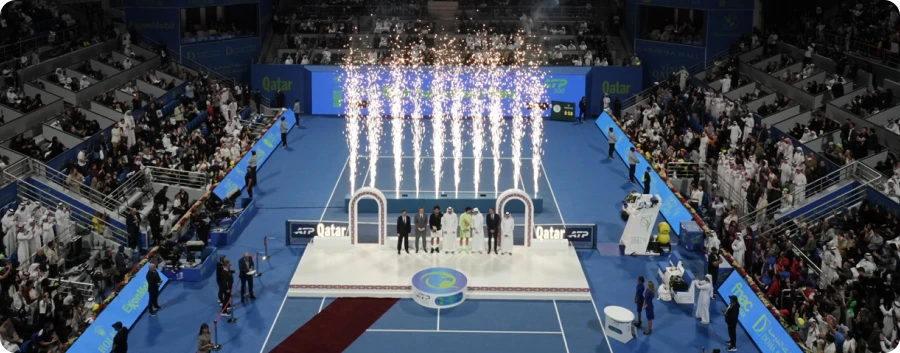
Five months of planning for a technically dense ceremony — 14 projectors, 150 lighting fixtures, lasers, fireworks, 7,000 LED wristbands — was canceled 15 days out and reinstated with only 10 days left.
Rather than trimming the show, the team recovered every technical layer in parallel, and the full redesign shipped with zero system failure, zero safety incidents, full effect layering, and 98% stadium capacity maintained during the ceremony.
Hong Kong WinterFest
Agency
Hong Kong Tourism Board
Country
🇭🇰 Hong Kong SAR China
Selected Award
BronzePublic Event
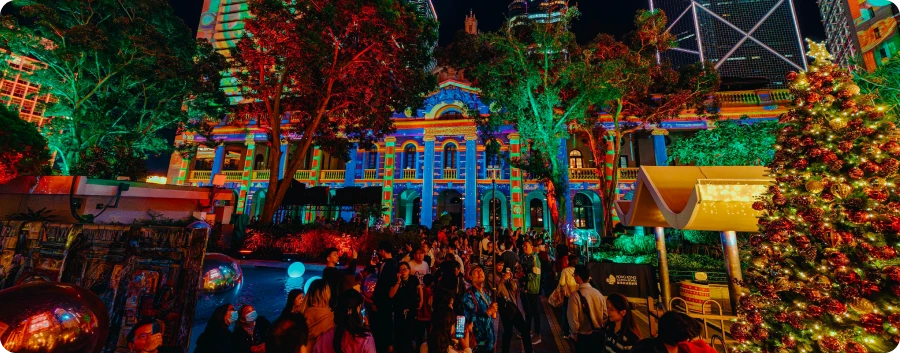
One week before opening, a devastating fire hit Hong Kong, forcing a rethink of both the launch date and the festive content.
The team took direction from the client, adjusted the launch, and built alternative non-firework New Year’s Eve celebrations, letting the event proceed with appropriate sensitivity while keeping the installation intact.
Bupa Symposium 2025
Agency
Bupa, supported by Top Banana Agency
Country
🇬🇧 United Kingdom
Selected Award
BronzeHealthcare & Wellness Event
Speaker flights were canceled, and technical issues surfaced during the event — the everyday shocks every producer eventually faces.
A documented plan covering logistics, speakers, and technology absorbed both, and the symposium ran without visible impact on the audience.
AlHuwayett
Agency
The Happiness Factory
Country
🇸🇦 Saudi Arabia
Selected Award
BronzeOutdoor Event
Of five interactive zones, the market zone was lagging on engagement.
Instead of redesigning the space, the team added live performers who let children role-play as merchants and traders — a content fix, not a construction fix.
The weak zone became one of the most popular in the experience.
Crowd, Access & Capacity
When thousands of people funnel through a single pier, a lobby staircase, or a festival gate, the difference between a great day and a dangerous one is decided long before doors open. The strongest work here is proactive: forecast how the crowd will behave, then build the flow, staffing, and re-routing to match — with dynamic scaling ready when reality outruns the plan.
Applicable strategies
Move a lingering crowd with acting, not announcements
Instead of loud PA calls or barriers that break the mood, station costumed staff at the bottleneck and have them visibly perform excitement about the next zone, so people follow them forward on their own.
Partner with a public authority to physically expand capacity at the chokepoint
Borrow infrastructure and legitimacy you cannot build yourself — extra parking, gates, road management — by bringing in the police or transport authority early.
Model capacity and forecast crowd behavior before, not during the event
Study who is actually coming and how they move, then plan the volatile zones in advance rather than reacting on the day.
Build the flow to scale dynamically — add slots, staff, and ticket releases on the fly
When demand outruns a fixed plan, adjust the model in real time rather than turning people away or overloading a room.
Pre-build re-routing protocols for surges you don’t control
If your access spine is a single entry and exit, prepare timed arrivals, layered checkpoints (staged stopping points that meter how many people move forward at once), shuttle routing and holding areas — plus rapid rebalancing ready for volume spikes from a neighboring venue or transport hub.
Give overflow attendees a tangible consolation so a “no” still lands as brand goodwill
When a limited-capacity experience over-subscribes, hand those who miss out something to take home, turning disappointment into a positive touchpoint.
Pre-write a formal, authority-approved access plan when scale multiplies
For a big jump in attendance across several arrival points, draft a coordinated transport and access control plan and get it signed off by the local authority before the event — governing arrivals, departures and multiple collection points so nothing is improvised at the door.
Real-life examples
Icons of Porsche 2025
Agency
MCH Global
Country
🇦🇪 United Arab Emirates
Selected Award
GoldMiddle Eastern Event
Anticipating record crowds for a sold-out 5th anniversary edition — 30,000+ attendees over two days, the highest in the festival’s history — the team upgraded traffic systems ahead of time and brought in a public partner to add physical capacity where cars actually queue.
In partnership with Dubai Police, they added a second parking area and contingency gates, reducing peak wait times from 16 minutes to 6 minutes on average.
Polo AlMarsa Qatar 2025
Agency
MUSE & fischerAppelt
Country
🇶🇦 Qatar
Selected Award
GoldCelebration Event
A single entry and single exit on the pier had to absorb unpredictable pedestrian surges of 1,000 to 5,000 people from adjacent cruise operations.
The team ran the access spine like a live algorithm — timed arrivals, layered checkpoints, shuttle routing and holding patterns — with rebalancing protocols ready for external spikes, and the event stayed functional and controlled throughout.
Allianz The Heroes 2026 Season 2
Agency
CREATIVE TALK
Country
🇹🇭 Thailand
Selected Award
GoldCorporate Event
A venue no-food rule forced a downstairs canteen, and attendees kept lingering there instead of moving up to the timed activities.
To manage the attendee flow from Floor 1 to 2 efficiently, the team utilized an “Actor Decoy” strategy. Staff stationed at the Canteen acted out visible excitement about the “Tree of Fate” activity upstairs, organically drawing crowds to the second floor without the need for loud, jarring announcements.
PUMA Tifosi Tram
Agency
Velocity Experience
Country
🇮🇹 Italy
Selected Award
BronzeBrand Engagement Event
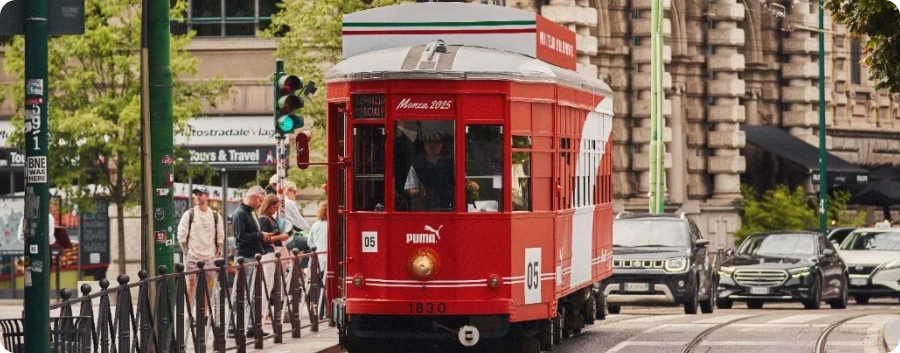
On day one, organic social buzz exceeded expectations, leading to over-subscription.
The team adapted dynamically, activating live sign-ups at the piazza kiosk, increasing time slots, and ensuring overflow visitors still received branded postcards and tote bags to take the experience with them.
Staffing & Crew
Shows fail quietly when a single person doesn’t show up — a stage tech, a choir member, a keynote speaker who never got to stand on the actual stage. The strongest teams treat absence and lost time not as bad luck but as a planning line item, building in the people, the practice space, and the swappable kit that keep the show running when reality slips.
Applicable strategies
Build a duplicate stage off-site when the real venue isn’t available in time
Match the actual dimensions and screen specs elsewhere so talent can rehearse with genuine content and cues without waiting for venue access.
Set up a parallel, accurately marked-out rehearsal area so practice continues while crews finish building
When install delays eat into stage time, tape out the real dimensions in a separate space and keep choreographers and performers rehearsing while the crew catches up.
Pre-train and rehearse substitute performers alongside a large cast, not just principals
For live productions with big ensembles, drill a pool of understudies through the same rehearsals as the main cast, so a last-minute absence never derails the piece.
Cross-train staff outside their primary job so anyone can plug a critical gap
Teach non-technical team members the key on-stage technical roles before the event, so a missing staffer doesn’t stop the show.
Specify modular, swappable scenic and technical kit so limited rehearsal time doesn’t threaten reliability
Choose systems you can install, test, replace, and reuse fast, so an untested window doesn’t become an untested show.
Build a fixed backup buffer into every staffing plan, paid for up front rather than scrambled for later
Reserve a set percentage of extra crew or performers on standby so a no-show never leaves a gap.
Real-life examples
Vibes Staffing
Agency
Vibes Events
Country
🇦🇪 United Arab Emirates
Selected Award
GoldStaffing Company
Delivering complex events on extreme timelines makes staffing a live risk, so the agency turned contingency into a standing policy rather than a scramble: a mandatory 10% backup buffer, absorbed as their own cost, plus onsite backup pools.
The approach produced a 98% attendance rate with onsite backup pools ensuring 100% coverage per project.
Bahrain Asian Youth Games 2025
Agency
Light House Productions
Country
🇧🇭 Bahrain
Selected Award
GoldCeremony
The installation slipped from 1 Oct to 5 Oct with only one week’s notice, cutting four days of onstage rehearsal.
Rather than lose the time, the team rebalanced crew allocations and set up an accurately marked parallel rehearsal area, keeping choreographers and performers working while the crew caught up, and the ceremony was delivered on schedule.
Tech Summit 2025
Agency
E.ON Digital Technology GmbH
Country
🇭🇺 Hungary
Selected Award
BronzeEmployee Engagement Event
A technical role went uncovered on the main stage during the event.
Because non-technical staff had been trained on those roles ahead of time, a team member stepped straight in and delivery continued with no visible disruption to the audience.
SAIC Volkswagen Teramont Pro Launch
Agency
VOK DAMS worldwide
Country
🇨🇳 China
Selected Award
BronzeBrand Experience - Automotive
Key presenters couldn’t rehearse on the venue stage until event day, risking an under-prepared live reveal.
The team built a duplicate stage off-site with matching dimensions and LED screens, letting speakers practice with real content three days before the event without venue access.
Supplier, Sponsor & Financial
A partner walking away five weeks out, a supply chain scattered across a dozen zones, a weather system that could scrap the outdoor plan — the money and the vendors behind an event are where a crisis most often lands.
Applicable strategies
When a critical supplier or sponsor pulls out close to the event, reframe the response
Stop treating it as a branding gap; treat it as a thing that could hurt people or halt the show. Build a centralized logistics plan — quantities per site, delivery schedules, clear responsibility chains — and separate emergency actions from standard planning with their own decision channels.
Build a fixed contingency margin into both budget and schedule before anything goes wrong
Reserve a set percentage of money and time so you can absorb a cost overrun or a disruption without stopping to negotiate for it in the moment.
Give each physical zone a dedicated owner and hold a regular cross-team sync to catch supplier problems early
When production is decentralized and vendors are split by area, one named zone manager per zone plus a weekly focused meeting surfaces coordination issues before they compound.
Real-life examples
Rimi Water Dance
Agency
SponsorKing - a member of 27Names
Country
🇱🇻 Latvia
Selected Award
BronzeSponsorship Experience
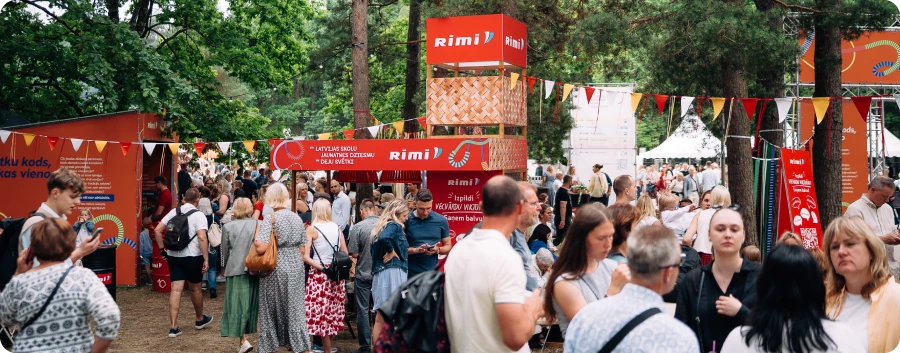
Five weeks before Latvia’s biggest youth festival, with almost 40,000 children rehearsing and performing outdoors in summer heat, the water sponsor withdrew and left no drinking water supply — a real risk of dehydration and hospitalization.
The team pivoted from marketing to operational risk mitigation, building a centralized logistics plan across partner agencies to secure and distribute an emergency-scale supply that no single local producer could deliver.
The result: 467,000 water bottles reached 38,000 children across multiple venues, and the festival ran safely with no health incidents reported.
Eurovision Song Contest 2025, Basel
Agency
SRG SSR Swiss Broadcasting Corporation
Country
🇨🇭 Switzerland
Selected Award
GoldCommunity Engagement Event
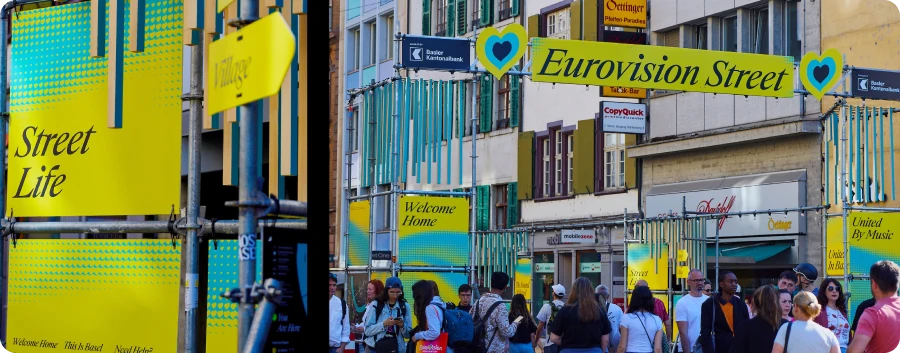
The team reserved a flat 20% margin in both budgets and schedules, so flexibility was available on demand rather than negotiated under pressure.
Per the application, weather threats triggered pre-planned indoor alternatives within 24 hours.
Icons of Porsche 2025
Agency
MCH Global
Country
🇦🇪 United Arab Emirates
Selected Award
GoldMiddle Eastern Event
With production decentralized and suppliers split by zone, coordination was flagged as a live risk to manage during the event itself.
The fix was structural: a dedicated manager owning each zone, plus weekly focused meetings to keep vendors aligned.
In closing
The best teams aren’t the ones that avoid problems — they’re the ones that see them coming and know exactly what to do next.
Take what works for you. Scale it up or down to fit your team, your budget, and the clients you serve.
The measure of success is quiet confidence: when something goes wrong, and it will, you’re not scrambling. You already know your next move.
Never miss an insight worth reading.
By providing your contact information, you agree to our Privacy policy, and you authorize Eventex Awards to contact you with more relevant information about the awards. You can unsubscribe at any time via the “Unsubscribe” button at the end of each email.
Events industry insight genuinely worth reading right now, at the right time
Get industry insights, early access to reports, and valuable content straight to your inbox.
Written by:
Tsveta van Son
Copywriting specialist
An experienced copywriter, editor, and translator, Tsveta writes for Eventex where she covers everything from experience marketing trends to the stories behind the event industry's top award-winning campaigns. With a background in journalism and a soft spot for Icelandic grammar, she believes the best content is precise, useful, and never boring.
.svg)
.svg)















.webp)