How events create lasting value for cities, venues, and communities
Tsveta van Son
September 24, 2026
Read time:
min
Every city has hosted an event that filled its streets, trended online, and was forgotten within a week. Outstanding work, however, is built on a different ambition — not to use a city as a backdrop, but to leave it permanently changed for the better.
Let’s see how that works in practice and how you can apply it for creating your own award-winning work.
Using a place vs. designing with it
There is a version of place-based event design that treats location as scenery: a recognizable façade in the background, a landmark visible from the stage, a city name in the press release. It works well enough. It rarely produces anything worthy of remembering.
The strongest place-based work in 2026 operates differently. Among gold-winning events in Eventex Awards 2026, using architecture as the primary storytelling canvas was nearly 12 times more prevalent than among non-winners, while lasting civic or community outcomes were nearly 4 times more common.
That shift — from using a place to designing with it — is what separates temporary spectacle from lasting impact.
Architecture as narrative, not backdrop
Two of this year's most recognized entries show what it looks like when architecture stops being a backdrop and becomes the storyteller.
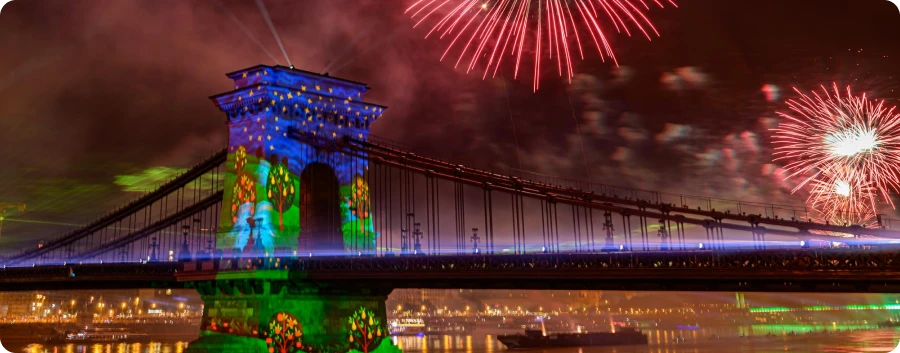
St. Stephen’s Day 2025
Lounge Group, Visual Europe Group
50
projectors on the Parliament alone
1,300
drones, plus fireworks launched from 9 barges
1.5 million
people on-site, national broadcast reaching many more
Hungary’s national day was reimagined as a coordinated landmark-scale show across Budapest. The Hungarian Parliament, the National Gallery, and five bridges spanning the Danube were turned into a single synchronized canvas — a 5-kilometer cityscape acting as one stage.
The agency was rebooked for the 2026 edition.
What made it work: the city’s own landmarks weren’t dressed up for the occasion. They were played — each surface a distinct instrument in a single composition.
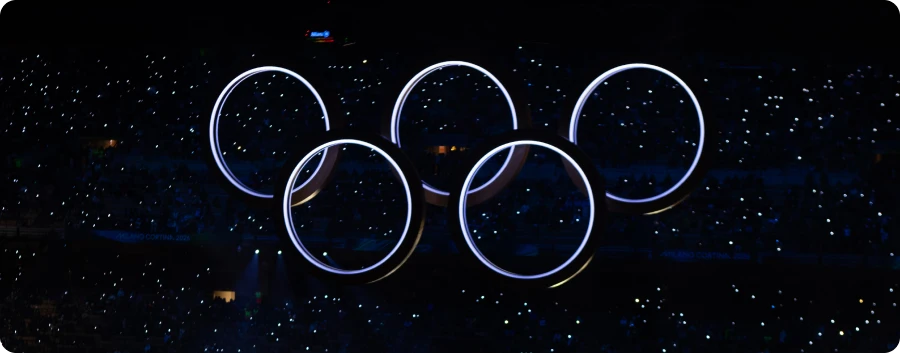
ARMONIA — Milano Cortina 2026 Winter Games Opening Ceremony
Balich Wonder Studio
In addition to not limiting its event to one place, ARMONIA turned four cities into one connected stage. The urban and alpine landscapes of northern Italy weren’t chosen for their visual appeal alone — they were cast as characters in the story of a country coming together.
The dual-cauldron logic — one urban, one alpine — gave the ceremony’s 2.5-billion-viewer audience a single image that only those specific places could have produced.
Temporary spectacle vs. lasting capability
The most ambitious place-based work of 2026 didn't stop at a memorable night but left something behind.
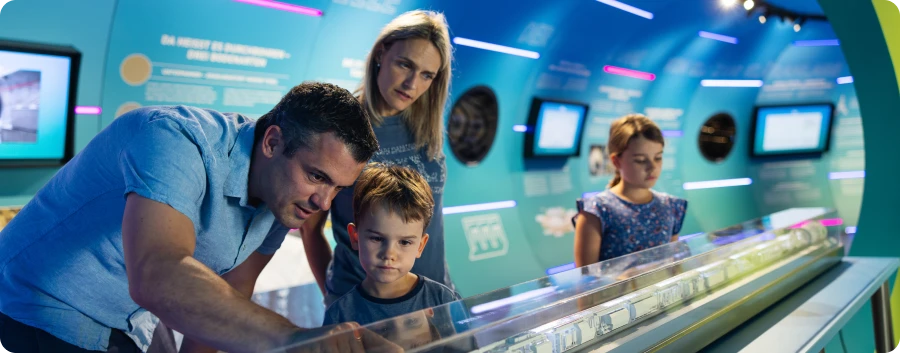
ÜberUnten
Stargate Group Werbeagentur with Valentinitsch Design
Nearly 10,000
visitors in its first year
12.5 million+
gross press reach, in contacts
To accompany Vienna’s largest sewer construction project in history, Stargate Group built a long-term public exhibition that turns invisible municipal infrastructure into a destination. ÜberUnten (“downbelow”) is a 30-meter walk-through tunnel — a 1:1 replica of the real sewer tube — designed as both an information center and a civic landmark.
The structure is designed to be dismantled and reassembled at a new location as the project progresses.
The launch event wasn’t the moment Vienna gained a visitor attraction. It was the moment Vienna gained a permanent space for civic dialogue about the infrastructure that quietly runs the city.
Burj Khalifa Laser Architecture
Emaar with Kvant Show Production
70
Kvant lasers, with 250 beam units, integrated into the façade
282,000+
official YouTube views at premiere
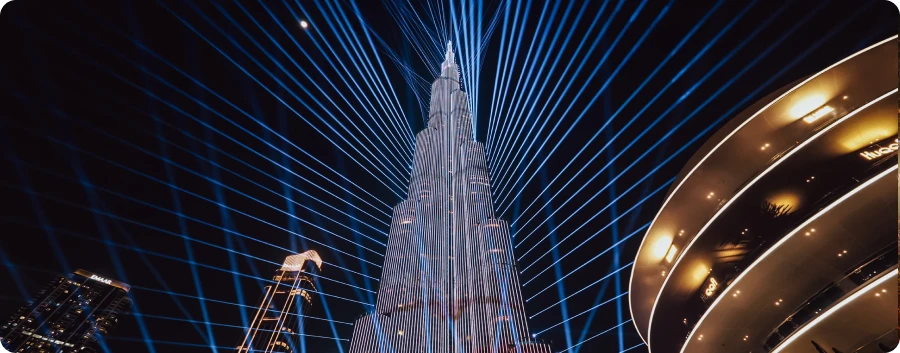
For the UAE’s 54th National Day, the team approached the Burj Khalifa not as a projection surface for one evening but as a permanent architectural canvas — engineering a vertical light system designed for continuous nightly operation.
Nine surrounding towers are also permanently fitted with laser systems.
It now operates as a nightly civic ritual on the world’s tallest building.
The lesson is in the time horizon. The team didn’t design a show — they installed a vertical instrument the city plays every night.
Local meaning and international reach
One of the recurring patterns in this year's strongest place-based work is the relationship between local specificity and global resonance. The events that traveled furthest — in media, in reach, in cultural impact — were the ones most deeply rooted in the particular meaning of their place.
ARMONIA's armonia concept only works because of what Italy means as a country of regions. ÜberUnten only works because of what Vienna's sewer network means to the city's history and identity. The Burj Khalifa system only works as a legacy because of what that building means to Dubai's sense of itself.
This connects to a broader principle visible across the year's strongest work: specificity is what travels. AI as a creative partner works best when it's grounded in deep cultural context — and the same is true of place. Generic place-based work generates local coverage. Work that is genuinely specific to its location generates global attention.
Questions to ask at the brief stage
The shift from using a place to designing with it starts before the creative work. Here are the questions worth asking before a location is confirmed:
What does this place mean — to the people who live here, and to those who will watch from elsewhere? The answer shapes every creative decision that follows.
What does the architecture offer that a purpose-built venue cannot? If the answer is "nothing except familiarity," the location is being used as scenery.
What will this event leave behind? A permanent installation, a nightly ritual, a piece of civic infrastructure, a cultural reference point — or nothing at all?
How does the event's local meaning translate for an international audience? The strongest place-based work gives distant viewers a reason to care that doesn't require prior knowledge of the location.
Is the venue a creative partner or a container? Venues that institutionalize their advantage — through programming, sustainability, accessibility, or architectural distinctiveness — produce different work than venues that simply provide a room.
On that last point, Eventex Awards 2026 recognized several venues that have turned their operational model into a creative asset. Euskalduna Bilbao pairs world-class acoustics with concerts from five euros. Costa Rica Convention Center has built sustainability into an auditable governance framework rather than a marketing claim. These are not venues that host excellent events — they are venues that make certain kinds of excellence possible.
Explore more insights from the Eventex Excellence Report 2026
Place-based design is one of six dimensions separating award-winning events from the rest. The Eventex Excellence Report 2026 explores the patterns, data, and case studies behind the world’s most outstanding events and experiences.
What makes an event memorable to the city that hosts it?
Treating the location’s architecture, history, infrastructure, and civic identity as creative material. Across the 1,405 entries from 58 countries in Eventex Awards 2026, gold-winning events were nearly 12 times more likely than entries that did not place to use architecture as their primary storytelling canvas.
What are examples of architecture-led event design?
Eventex Awards 2026 recognized several strong examples: Lounge Group turned Budapest’s Parliament, National Gallery, and five Danube bridges into a single synchronized 5-kilometer canvas for Hungary’s national day; Balich Wonder Studio turned four Italian cities into one connected stage for the Milano Cortina 2026 Opening Ceremony.
How can an event create lasting value for a city or community?
By leaving behind a permanent capability, infrastructure, or cultural asset rather than only a memory. ÜberUnten converted a sewer construction project launch into a permanent public exhibition that had nearly 10,000 visitors in its first year. The Burj Khalifa laser system converted a National Day celebration into a nightly civic ritual. Both treated the launch event as the opening of something permanent, not the culmination of something temporary.
How do local events generate international reach?
Through specificity, not scale. The 2026 Eventex data consistently shows that the work generating the widest international attention was the most deeply rooted in the particular meaning of its place. ARMONIA’s concept only worked because of what Italy means as a country of distinct regions. Work that is genuinely specific to its location gives distant audiences a reason to care that generic place-based work cannot produce.
What should destinations and venues ask when evaluating an event proposal?
Four questions worth applying to any proposal: Does the event use the location’s specific meaning, or could it happen anywhere? What does the event leave behind once it ends? How does its local significance translate for audiences who weren’t there? And does the event treat the venue as a creative partner — or simply as a container?
What makes a venue award-winning?
Eventex Awards 2026 data suggests the strongest venues have institutionalized their advantage — building sustainability, programming depth, accessibility, or architectural distinctiveness into their operating model rather than treating them as occasional marketing claims. Euskalduna Bilbao programs more than 70 concerts in a single weekend with tickets from five euros. Costa Rica Convention Center neutralizes 100% of operational emissions within its facilities through an auditable framework. Excellence in venues, as in events, is a system — not a streak.
What do award-winning venues do differently?
They build the advantage into the operating model rather than into marketing. Eventex Awards 2026 recognized Euskalduna Bilbao for programming 70 concerts across a single weekend at public prices, and the Costa Rica Convention Center for neutralising 100% of operational emissions inside its facilities under an auditable framework rather than a claim.
Never miss an insight worth reading.
By providing your contact information, you agree to our Privacy policy, and you authorize Eventex Awards to contact you with more relevant information about the awards. You can unsubscribe at any time via the “Unsubscribe” button at the end of each email.
Events industry insight genuinely worth reading right now, at the right time
Get industry insights, early access to reports, and valuable content straight to your inbox.
Written by:
Tsveta van Son
Copywriting specialist
An experienced copywriter, editor, and translator, Tsveta writes for Eventex where she covers everything from experience marketing trends to the stories behind the event industry's top award-winning campaigns. With a background in journalism and a soft spot for Icelandic grammar, she believes the best content is precise, useful, and never boring.
Table of contents
Explore the Eventex Excellence Report 2027
See what separates winning entries from the rest
Get insight on strategies and trends that win awards
Use the award-winning patterns to elevate your own work
.svg)
.svg)





.webp)